| |
|
|
In the context of healthy eating habits, a dietary pattern inspired
by the principles of the Mediterranean diet is associated with
multiple health benefits, due to its protective effects against a
wide range of chronic and metabolic diseases, including obesity,
diabetes mellitus (DM), CVD, neurodegenerative diseases and cancer
[1].
The term “Mediterranean diet” was introduced in the mid-1970s in the
United States of America (USA) by Ancel Keys (1904–2004), one of the
most prominent scientists of our time, and his wife Margaret Haney.
In their publications, they were the first in the English-speaking
world to demonstrate the value of the Mediterranean diet on the
basis of their scientific research combined with culinary art.
Thanks to their studies, the World Health Organization (WHO) was
later encouraged to promote the Mediterranean diet in order to
improve global health and to use the Mediterranean diet pyramid as a
pedagogical tool illustrating its basic rules [2].
The Mediterranean diet was recognized as an “intangible cultural
heritage of France and Italy, Greece, Spain and Morocco by the
United Nations Educational, Scientific and Cultural Organization
(UNESCO) in 2010 [3]. The basis of the Mediterranean diet is a
balanced intake of nutrients (carbohydrates, proteins, fats,
vitamins and minerals) that are rich in plant-based proteins,
complex carbohydrates and fiber, monounsaturated fatty acids and
polyunsaturated fatty acids [4]. The Mediterranean diet, which is
based on the traditional diet of the Mediterranean countries, has a
significant positive impact on health. It reduces the risk of a wide
range of diseases, especially CVD, type 2 diabetes mellitus (T2DM),
obesity and certain types of cancer [5]. The results of the
conducted studies indicate that a two-point increase in the score of
adherence to the Mediterranean diet determines a 9% reduction in
total mortality, a 9% reduction in CVD mortality, a 6% reduction in
the incidence of or mortality from neoplasms, and a 13% reduction in
the incidence of Parkinson’s disease and Alzheimer’s disease [6].
This dietary regimen has favorable effects on the endocrine and
metabolic balance, contributes to the regulation of insulin
sensitivity, blood pressure, lipid profile, lipoprotein particles,
oxidative stress, inflammation and the prevention of carotid
atherosclerosis. Unsaturated fats and polyphenols, which
characterize the Mediterranean diet, form the basis of CVD
prevention, especially in dietary regimens rich in vegetables,
showing lower levels of total cholesterol and lower levels of
systolic blood pressure. Also, this dietary regimen has favorable
effects in reducing glycoxidative damage and the inflammatory
response, compared with a diet based on the consumption of saturated
fatty acids [7].
Assessing the impact of Mediterranean food choices on the serum
metabolic profile in healthy adolescents performing physical
activity of different intensity levels, it was shown that active
subjects who consume typical Mediterranean food have a better serum
metabolic profile, which suggests that adherence to the
Mediterranean pattern and the performance of physical activity lead
to a significant reduction in the glucose and lipid profile, thus
making the Mediterranean diet and physical activity a winning
combination for health status [8].
Conducted studies have shown that practicing the Mediterranean diet
is a significant factor in the prevention of malignant diseases. In
persons who practiced this dietary regimen, an increase in the
plasma concentration of several binding proteins was recorded, such
as insulin-like growth factor binding protein (IGFBP)-1, IGFBP-2 and
sex hormone-binding globulin, which resulted in a reduction in the
biological activity of IGF-1, testosterone and estradiol. Insulin,
estrogens, androgens and IGF-1 are powerful cellular mitogens,
associated with the development and growth of several tumors,
including cancer of the breast, colon, prostate, pancreas and
endometrium [9].
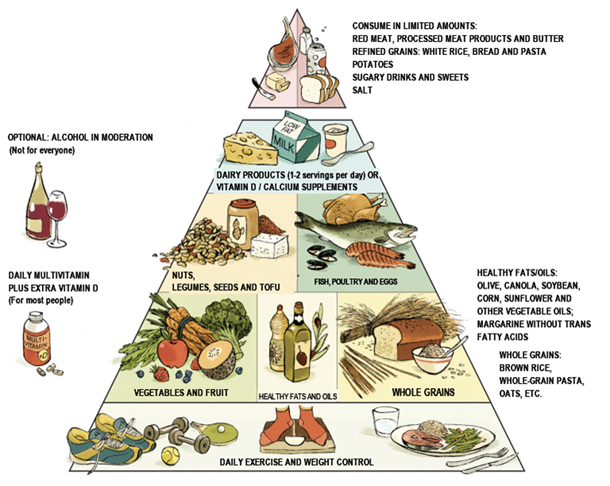
The Mediterranean diet pyramid
The Mediterranean diet pyramid is representative of the
Mediterranean diet and was developed on the basis of the dietary
habits of long-lived adults in the Mediterranean region. The pyramid
follows general guidelines on the choice of foods, but does not
prescribe their exact quantity. Nutritionists, sociologists,
anthropologists and farmers have collectively contributed to the
development of what we currently call the Mediterranean diet,
adapting the pyramid to the new lifestyle of the Mediterranean
region [10]. The Mediterranean diet pyramid (Figure 1.) includes
ingredients from all food groups in appropriate proportions and
frequencies and is intended for the generally healthy adult
population, However, it is flexible enough to also meet the needs of
pregnant women, children and people with various pathophysiological
conditions [11].Figure 1. The Mediterranean diet
pyramid
Source:
https://dijetapro.org/wp-content/uploads/2015/12/piramida-1-1.png
Cereals form the basis of the Mediterranean diet, providing
calories, macronutrients, micronutrients, dietary fiber, minerals
and a multitude of phytochemicals. These nutritional factors are
necessary for the homeostasis of human metabolism and the function
of multiple organs. The intake of cereals, especially whole grains,
contributes to the preservation of health and the prevention of CVD,
cerebrovascular disorders, DM, malignant diseases and a reduction in
the rate of total mortality [12]. In the context of preserving the
cardiovascular and cerebral systems, regular intake of cereals
reduces the risk of coronary heart disease, myocardial infarction,
heart failure, small- and large-vessel stroke and ischemic stroke
[13]. They achieve their cardioprotective potential by lowering
blood pressure, total cholesterol and low-density lipoprotein
cholesterol and by regulating glucose levels [14].Regular use of
cereals in the diet also exhibits antioncogenic potential,
especially in tumors of the gastrointestinal tract. This
antioncogenic potential is particularly manifested by a reduced risk
of pancreatic cancer in middle-aged men [15]. Conducted studies
point to the importance of cereals, especially rice, for maintaining
ideal weight and preventing obesity. Rice achieves its anti-obesity
effect through its influence on vascular function and on the
condition of the liver and pancreas, by reducing adipocyte
hypertrophy and lipid accumulation, whereby the inflammatory and
antioxidant systems are improved and fecal elimination of
cholesterol is increased. It exerts particularly protective effects
at the level of the host microbiota and contributes to the
restoration of eubiosis [16].An optimal daily intake of cereals in
the range of 3 to 7 servings per day, which is equivalent to 90 to
210 g of whole-grain products, is associated with the lowest risk of
mortality from all causes, coronary heart disease, T2DM and
colorectal cancer [17].Pasta is made from refined grains, which may
contribute to its perception as “fattening”, but unlike many other
refined grains, the unique structure of pasta makes it a
carbohydrate with a low glycemic index. Low glycemic index/load
diets have been shown to be beneficial for weight loss or weight
maintenance in adults and children, even when the low glycemic index
diet includes pasta [18]. Bread is an integral part of the diet
worldwide, with a significant contribution to key nutrients.
Although evidence on the impact of bread consumption on health is
still lacking and depends on the overall diet, whole-grain breads
have shown consistent beneficial effects on human health [19]. Bread
provides several nutrients such as sugar, proteins, iron, calcium
and various vitamins. An average daily intake of 300 g of bread can
provide the nutrients needed by the body and create the desired
nutritional status. Bread can provide 1,2% of protein, 60% of
thiamine and niacin, 40% of calcium and 80% of the daily iron
requirement of an adult [20].
According to WHO recommendations, consuming adequate amounts of
fruit and vegetables is one of the basic elements of a healthy diet,
which reduces the risk of chronic non-communicable diseases and
ensures an optimal daily intake of dietary fiber [21]. The
importance of fruit and vegetables in the diet is reflected in the
high percentage of fiber, minerals, vitamins and phytochemicals they
contain [22]. These nutritional components have a favorable effect
on the body through the regulation of oxidative stress, inflammatory
processes and insulin resistance. The high fiber content of fruit
and vegetables has a favorable effect on the regulation of
cholesterol levels and arterial blood pressure [23]. The consumption
of vegetables, as well as the combination of fruit and vegetables,
has a favorable effect on reducing the risk of metabolically
unhealthy obesity, especially in young people who are obese. In a
study conducted by Guedes et al.[24], in a population of university
students, it was found that inadequate intake of fruit and
vegetables was present in 87% of respondents, with a prevalence of
overweight of over 39%, whereby the risk of overweight was two to
three times higher in respondents who did not have an adequate
intake of fruit and vegetables. In recent years, it has been
established that the consumption of fruit and vegetables has a
preventive effect against certain types of cancer, especially
gastrointestinal cancers, due to their high content of fiber and
antioxidants. In a large meta-analysis of cohort studies,increased
consumption of fruit alone and in combination with vegetables
corresponds to a reduction in the probability of gastric cancer by
13% and 25% [25].The recommended daily intake is at least 200 g of
fruit and 150-200 g of vegetables, i.e. at least 1-2 servings of
fruit and 3-4 servings of vegetables per day. Consumption of
phytosaccharides (>450 g/day) and fruit intake reduce the risk of
CVD by 14,2% and 6,7% [26-28].
Olive oil is located at the center of the Mediterranean diet
pyramid. It is an ideal source of monounsaturated fats, vitamin E,
polyphenols, chlorophyll and phytosterols, micronutrients that exert
numerous benefits on the body, including anti-inflammatory,
antioxidant, neuroprotective, anticancer, antidiabetic,
antimicrobial and antisteatotic effects [29-30]. They exhibit a
particular protective potential at the level of the cardiovascular
system, because it contributes to the regulation of lipid status,
blood pressure, insulin sensitivity and glycemic control. Olive oil
shows great potential in the positive modulation of the composition
of the gut microbiota and of microbially produced products, which is
associated with the prevention of cardiometabolic diseases [31].
Daily use of olive oil in the diet can significantly reduce the risk
of CVD, stroke and T2DM, but also of overall mortality. The maximum
benefit can be achieved by consuming between 20 and 30 g per day. In
a study conducted by Donat-Vargas et al., it was found that an
additional intake of olive oil of 25g/day reduces the risk of CVD by
16% and the risk of T2DM by 22% [32].
According to the Mediterranean diet pyramid, milk and dairy products
are foods whose consumption is recommended daily. Dairy products are
rich in high-quality proteins, vitamins (riboflavin, vitamin D,
vitamin B-12), calcium, potassium and magnesium, which are important
for maintaining muscle mass, improving vascular function, bone
mineralization and neuromuscular function, and contribute to overall
cardiovascular health [33]. Fermented or cultured dairy products,
such as yogurt, contain probiotic bacterial cultures that are
assumed to reduce the production of trimethylamine-N-oxide, a
metabolite that is an early predictor of metabolic syndrome,
implicated as a cause of atherosclerosis and CVD [34]. The results
of conducted studies suggest that the intake of fermented dairy
products for every 20 g reduces the risk of the incidence of and
mortality from CVD[35]. In studies conducted by Guo[36] et al. in
2021, and Lu Y. et al. in 2025 [37], it was found that the
consumption of dairy products has a significant impact on reducing
the incidence of hypertension and cerebrovascular diseases, and
favorable effects on serum cholesterol, triacylglycerides and blood
pressure. Daily consumption of dairy products has a positive effect
on anthropometric parameters, specifically on waist circumference,
especially in women. Women who consume more than 1,9 servings of
dairy products per day are 53% less likely to have a waist
circumference greater than 80 cm [38].
Thanks to their rich bioactive composition, nuts exert numerous
positive effects on the body. A high percentage of monounsaturated
and polyunsaturated fatty acids, tocopherols and tocotrienols,
phytosterols, sphingolipids, carotenoids, chlorophyll and alkyl
phenols, and phenolic compounds (including flavonoids, phenolic
acids, stilbenes, lignans) exert positive effects on the
cardiovascular, central nervous, respiratory and endocrine systems,
with a significant role in reducing the risk of developing malignant
diseases [39]. A nut intake of the recommended 28 g/day is
associated with a 21% reduction in the risk of CVD (including the
incidence of and mortality from coronary heart disease, atrial
fibrillation and stroke mortality), an 11% reduction in the risk of
death from cancer and a 22% reduction in all-cause mortality [40].
Each increase in total nut consumption of 5 g/day is associated with
a 3%, 6% and 25% lower risk of pancreatic and colon cancer [41]. Nut
intake contributes to the regulation of all biochemical parameters
associated with DM, including fasting glycemia, plasma insulin,
glycated hemoglobin (HbA1c) and the oral glucose tolerance test (OGTT)
[42].
The Mediterranean region has a rich fishing tradition, which results
in significant fish consumption. Fish meat is rich in many
polyunsaturated fatty acids that exert favorable effects on the
cardiovascular system. Polyunsaturated fatty acids include
long-chain Ω-3, especially eicosapentaenoic acid and docosahexaenoic
acid, obtained primarily from fish and seafood, as well as alpha-linolenic
acid, obtained from various plant sources. Polyunsaturated fatty
acids exert a protective role on the cardiovascular system by
increasing the level of high-density lipoproteins, reducing
inflammatory factors, improving heart rhythm and blood pressure,
regulating left ventricular diastolic filling and increasing vagal
tone. [43]. Consumption of fish 3-4 times a week reduces the risk of
developing coronary diseases by about 12%, while a lower weekly fish
intake of about 100-150 g also reduces the risk of coronary
diseases, but by a significantly smaller percentage, of 4-7% [44].
In a study conducted by Mihan et al., the risk of CVD was lowest
with a moderate amount of fish (i.e. at least 175 g/week, or
approximately 2 servings/week), with no further apparent reduction
in risk with a higher fish intake (i.e. >350 g/week, or >3-4
servings/week) [45].
From a nutritional point of view, meat contains all the essential
amino acids (which makes it a complete protein), is rich in some key
micronutrients, such as vitamin B12, iron, zinc, selenium, iodine
and vitamin D, and also has non-negligible amounts of essential
fatty acids, especially in the lean parts (e.g. monounsaturated
fatty acids, long-chain omega-3 polyunsaturated fatty acids, as well
as conjugated linoleic acid) [46]. White meat, which differs in its
nutritional composition from red meat in terms of a lower percentage
of fat and iron, has a favorable effect on health. White meat
achieves its favorable effect on the body by reducing the risk of
developing CVD, DM, stroke, cancer, as well as all-cause mortality
[47]. Potentially beneficial effects are achieved if fresh,
unprocessed and lean white meat is used in the diet [48]. A
particularly important effect of white meat is reflected in the
prevention of cancer. Higher consumption of red meat is associated
with an 84% increased risk of hepatocellular carcinoma, while white
meat is associated with a 39% reduced risk; red meat consumption is
associated with a higher risk of breast cancer, while the use of
white meat in the diet can reduce this risk [49]. White meat also
has a positive effect on body weight regulation, in terms of a
favorable effect on the reduction of excess body weight, especially
in women who are overweight or obese [50].
Eggs are a well-known source of dietary cholesterol, which is why
their excessive use in the diet was disputed at the end of the last
century. The American Heart Association (AHA), in its 2000 revision,
recommended a cholesterol intake of less than 300 mg/day in order to
reduce the increase in blood cholesterol, despite the lack of
concrete evidence that egg consumption can cause elevated
cholesterol levels. The latest Dietary Guidelines for Americans no
longer set limits on egg consumption, but instead advocate egg
consumption as part of a healthy diet [51]. An egg contains 177 mg
of cholesterol, but only 1.3 g of saturated fat [52]. The lipids in
egg yolks comprise a mixture of healthy unsaturated fatty acids,
including triglycerides, phospholipids, cholesterol, high-density
lipoproteins (HDL), low-density lipoproteins (LDL) and
very-low-density lipoproteins (VLDL). LDL makes up two thirds of the
total yolk and is responsible for its emulsifying properties, while
proteins provide essential amino acids. Egg yolks serve as a
significant source of essential vitamins such as A, B2, B6, B12,
biotin, folic acid, D, E and K, together with minerals such as
calcium, zinc, iron, potassium, magnesium, iodine, fluoride,
selenium and phosphorus. These vitamins and minerals play a key role
in maintaining vision, contributing to bone and muscle growth,
promoting well-being and strengthening immunity. In addition, they
contain antioxidants such as lutein and zeaxa. The proteins found in
eggs exert numerous beneficial effects on the body, which are
reflected in the prevention of malnutrition, improvement of skeletal
muscle function, and anti-infective, hypotensive, anticancer and
anti-obesity properties [53]. When it comes to the potential
protective effect on the cardiovascular system, the emphasis is
placed on the amount of eggs consumed. The results of a study
conducted by Godos et al. [54] revealed that a moderate egg intake
(4/week) did not increase the risk of CVD, while a high egg intake
(1/day) was associated with heart failure. Another study showed that
a moderate egg intake (5–6 per week) was associated with a reduced
risk of CVD, including a 26% lower risk of hemorrhagic stroke and a
12% lower risk of coronary heart disease [55].
The harmful effect of red meat on cardiovascular health has been
widely demonstrated, primarily due to its higher content of
saturated fatty acids and cholesterol. Red meat consumption is
associated with the risk of CVD, primarily coronary heart disease,
as well as with an increased risk of all-cause mortality. Reducing
red meat intake by 3 servings per week reduces the risk of the
incidence of acute myocardial infarction, stroke and T2DM[56].
Additional harmful factors accompanying the use of red meat in the
diet are increased amounts of salt, nitrates and peroxynitrites,
which can influence the development of atherosclerosis and vascular
dysfunction, which are predictors of CVD, with a particular
influence on the development of ischemic heart disease [57]]. Red
meat consumption is a risk factor for the development of
hypertension. Replacing one serving per day of red meat with white
meat, fish, eggs or dairy products reduces the risk of developing
hypertension by 8-15% [58].
A category of foods that, according to the guidelines of the
Mediterranean diet, should be limited are sweets. Sweets and other
sweetened foods have a high content of energy and added sugar, while
their content of essential micronutrients is generally low [59]. The
consumption of sweets has numerous negative health effects,
including the risk of obesity, DM, CVD and hypertension. According
to WHO recommendations, sugar consumption should be limited to less
than 5% of total energy intake [60].
CONCLUSION
CVD continue to be the leading cause of morbidity and mortality
in the world, with an unhealthy diet playing a significant role
among changeable or modifiable risk factors. The modern lifestyle
and changes in dietary habits have contributed to an increased
frequency of obesity, diabetes mellitus and other metabolic
disorders that form the basis for the development of CVD.
The Mediterranean diet is one of the best-studied and scientifically
confirmed models of healthy eating. Its basic characteristics
include a high intake of whole grains, fruit, vegetables, legumes,
nuts, olive oil and fish, with a moderate intake of dairy products,
eggs and white meat, and limited consumption of red meat,
industrially processed food and sweets. Numerous epidemiological,
cohort and intervention studies have shown that adherence to the
Mediterranean dietary pattern contributes to an improved lipid
profile, regulation of arterial blood pressure, reduction of
inflammation and oxidative stress, better glycemic control and a
reduced risk of atherosclerotic changes.
The available scientific evidence indicates that the Mediterranean
diet significantly reduces the incidence of and mortality from CVD,
but also the risk of other chronic non-communicable diseases,
including T2DM, obesity and certain malignant diseases. Therefore,
its application can be considered one of the most effective
non-pharmacological strategies in the primary and secondary
prevention of cardiovascular diseases. Promoting the principles of
the Mediterranean diet through public health programs, health
education and everyday clinical practice can contribute to improving
the health status of the population and reducing the burden of CVD.
REFERENCES
- Ingrassia M, Altamore L, Columba P, Raffermati S, Lo Grasso
G, Bacarella S, et al. Mediterranean Diet, Sustainability, and
Tourism—A Study of the Market’s Demand and Knowledge. Foods.
2023; 12(13):2463.
- Mentella MC, Scaldaferri F, Ricci C, Gasbarrini A, Miggiano
GAD. Cancer and Mediterranean Diet: A Review. Nutrients. 2019
Sep 2;11(9):2059.
- Ozsoy S, Sultanoglu N, Sanlidag T. The role of Mediterranean
diet and gut microbiota in type-2 diabetes mellitus associated
with obesity (diabesity). J Prev Med Hyg. 2022 Oct 17;63(2 Suppl
3):E87-E92.
- Kiani AK, Medori MC, Bonetti G, Aquilanti B, Velluti V,
Matera G, et al. Modern vision of the Mediterranean diet. J Prev
Med Hyg. 2022 Oct 17;63(2 Suppl 3):E36-E43.
- Sofi F, Cesari F, Abbate R, Gensini GF, Casini A. Adherence
to Mediterranean diet and health status: meta-analysis. BMJ.
2008 Sep 11;337:a1344.
- Mazza E, Ferro Y, Pujia R, Mare R, Maurotti S, Montalcini T,
Pujia A. Mediterranean Diet In Healthy Aging. J Nutr Health
Aging. 2021;25(9):1076-1083.
- Ceraudo F, Caparello G, Galluccio A, Avolio E, Augimeri G,
De Rose D,et al. Impact of Mediterranean Diet Food Choices and
Physical Activity on Serum Metabolic Profile in Healthy
Adolescents: Findings from the DIMENU Project. Nutrients. 2022
Feb 19;14(4):881.
- Dominguez LJ, Di Bella G, Veronese N, Barbagallo M. Impact
of Mediterranean Diet on Chronic Non-Communicable Diseases and
Longevity. Nutrients. 2021 Jun 12;13(6):2028.
- Naureen Z, Bonetti G, Medori MC, Aquilanti B, Velluti V,
Matera G,et al. Foods of the Mediterranean diet: lacto-fermented
food, the food pyramid and food combinations. J Prev Med Hyg.
2022 Oct 17;63(2 Suppl 3): E28-E35.
- Serra-Majem L, Tomaino L, Dernini S, Berry EM, Lairon D, Ngo
de la Cruz J, et al. Updating the Mediterranean Diet Pyramid
towards Sustainability: Focus on Environmental Concerns. Int J
Environ Res Public Health. 2020 Nov 25;17(23):8758.
- Liu X, Shi L, Sun L. Grain Intake and Cardiometabolic
Health-Towards Precision Nutrition. Nutrients. 2023 Oct
30;15(21):4605.
- Liu J, Cai D. Causal relationship of cereal intake and type
with cardiovascular disease: a Mendelian randomization study.
Front Nutr. 2024 Jan 23;10:1320120.
- Zhu R, Xu H, Cai H, Wang S, Mao J, Zhang J, et al. Effects
of cereal bran consumption on cardiometabolic risk factors: A
systematic review and meta-analysis. Nutr Metab Cardiovasc Dis.
2023 Oct;33(10):1849-1865.
- Schacht SR, Olsen A, Dragsted LO, Overvad K, Tjønneland A,
Kyrø C. Whole-Grain Intake and Pancreatic Cancer Risk-The
Danish, Diet, Cancer and Health Cohort. J Nutr. 2021 Mar
11;151(3):666-674.
- Sivamaruthi BS, Alagarsamy K, Thangaleela S, Bharathi M,
Kesika P, Chaiyasut C. Composition, Microbiota, Mechanisms, and
Anti-Obesity Properties of Rice Bran. Foods. 2023 Mar
18;12(6):1300.
- Skeie G, Fadnes LT. Cereals and cereal products - a scoping
review for Nordic Nutrition Recommendations 2023. Food Nutr Res.
2024 Feb 14;68.
- Sanders LM, Slavin J. Impact of Pasta Intake on Body Weight
and Body Composition: A Technical Review. Nutrients. 2023 Jun
9;15(12):2689.
- Ribet L, Kassis A, Jacquier E, Monnet C, Durand-Dubief M, et
al. The nutritional contribution and relationship with health of
bread consumption: a narrative review. Crit Rev Food Sci Nutr.
2025;65(28):5698-5725.
- Aghalari Z, Dahms HU, Sillanpää M. Evaluation of nutrients
in bread: a systematic review. J Health Popul Nutr. 2022 Nov
14;41(1):50.
- World Health Organization [internet]. Geneva:World Health
Organization;c2023[accessed 15.02.2026].Carbohydrate intake for
adults and children: WHO guideline. Available at:
https://www.who.int/publications/i/item/9789240073593
- Kim J, Tan LJ, Jung H, Roh Y, Lim K, Shin S. The association
between fruit and vegetable consumption and metabolic syndrome
in Korean adults: does multivitamin use matter? Epidemiol
Health. 2022;44:e2022039.
- Papaioannou KG, Kadi F, Nilsson A. Benefits of Fruit and
Vegetable Consumption on Prevalence of Metabolic Syndrome Are
Independent of Physical Activity Behaviors in Older Adults.
Nutrients. 2022 Jan 9;14(2):263.
- Tirani SA, Mirzaei S, Asadi A, Asjodi F, Iravani O, Akhlaghi
M,et al. Associations of Fruit and Vegetable Intake with
Metabolic Health Status in Overweight and Obese Youth. Ann Nutr
Metab. 2023;79(4):361-371.
- Guedes DP, Silva ALDS. Exercise and fruit/vegetable intake,
and their associations with body weight status in university
students. Nutr Hosp. 2021 Jun 10;38(3):545-554.
- Naemi Kermanshahi M, Safaei E, Tutunchi H, Naghshi S,
Mobarak S, Asadi M, et al. Fruit and vegetable intake in
relation to gastric cancer risk: A comprehensive and updated
systematic review and dose-response meta-analysis of cohort
studies. Front Nutr. 2023 Feb 6;10:973171.
- Mesters I, van Keulen HM, de Vries H, Brug J. Intervention
Fidelity of Telephone Motivational Interviewing On Physical
Activity, Fruit Intake, and Vegetable Consumption in Dutch
Outpatients With and Without Hypertension. Int J Behav Med. 2023
Feb;30(1):108-121.
- Haider S, Wakolbinger M, Rieder A, Winzer E. Obesity, Fruit
and Vegetable Intake, and Physical Activity Patterns in Austrian
Farmers Compared to the General Population. Int J Environ Res
Public Health. 2022 Jul 27;19(15):9194.
- Mekonene M, Gebremedhin S, Bikila D, Ashebir G, Baye K.
Association of fruit and vegetable intake with predicted 10-year
cardiovascular disease risk among hypertensive patients in Addis
Ababa, Ethiopia: a cross-sectional study. BMJ Open. 2023 Aug
28;13(8):e075893.
- Kiani AK, Medori MC, Bonetti G, Aquilanti B, Velluti V,
Matera G,et al. Modern vision of the Mediterranean diet. J Prev
Med Hyg. 2022 Oct 17;63(2 Suppl 3):E36-E43.
- Katsiki N, Pérez-Martínez P, Lopez-Miranda J. Olive Oil
Intake and Cardiovascular Disease Prevention: "Seek and You
Shall Find". Curr Cardiol Rep. 2021 May 7;23(6):64.
- Xia M, Zhong Y, Peng Y, Qian C. Olive oil consumption and
risk of cardiovascular disease and all-cause mortality: A
meta-analysis of prospective cohort studies. Front Nutr. 2022
Oct 18;9: 1041203
- Donat-Vargas C, Sandoval-Insausti H, Peñalvo JL, Moreno
Iribas MC, Amiano P, Bes-Rastrollo M, et al. Olive oil
consumption is associated with a lower risk of cardiovascular
disease and stroke. Clin Nutr. 2022 Jan;41(1):122-130.
- Sharifan P, Roustaee R, Shafiee M, Longworth ZL, Keshavarz
P, Davies IG,et al. Dairy Consumption and Risk of Cardiovascular
and Bone Health Outcomes in Adults: An Umbrella Review and
Updated Meta-Analyses. Nutrients. 2025 Aug 22;17(17):2723.
- Murphy B, Talegawkar SA, O'Connor J, Kandula NR, Kanaya AM,
Allison MA,et al. Association between dairy product intake and
body composition among South Asian adults from the Mediators of
Atherosclerosis in South Asians Living in America (MASALA)
study. Br J Nutr. 2021 Oct 14;126(7):1100-1109.
- Giosuè A, Calabrese I, Vitale M, Riccardi G, Vaccaro O.
Consumption of Dairy Foods and Cardiovascular Disease: A
Systematic Review. Nutrients. 2022 Feb 16;14(4):831
- Guo J, Givens DI, Heitmann BL. Association between dairy
consumption and cardiovascular disease events, bone fracture and
all-cause mortality. PLoS One. 2022 Sep 9;17(9):e0271168.
- Lu Y, Sugawara Y, Hozawa A, Iwasaki M, Sawada N, Kanehara R,
et al. Research Group for the Development and Evaluation of
Cancer Prevention Strategies in Japan. Association between dairy
intake and all-cause and cause-specific mortality: a pooled
analysis of 0.4 million Japanese adults from 10 population-based
cohort studies. Int J Epidemiol. 2025 Oct 14;54(6):dyaf180.
- Murphy B, Talegawkar SA, O'Connor J, Kandula NR, Kanaya AM,
Allison MA,et al . Association between dairy product intake and
body composition among South Asian adults from the Mediators of
Atherosclerosis in South Asians Living in America (MASALA)
study. Br J Nutr. 2021 Oct 14;126(7):1100-1109.
- Glenn AJ, Aune D, Freisling H, Mohammadifard N, Kendall CWC,
Salas-Salvadó J,et al. Nuts and Cardiovascular Disease Outcomes:
A Review of the Evidence and Future Directions. Nutrients. 2023
Feb 11;15(4):911.
- Balakrishna R, Bjørnerud T, Bemanian M, Aune D, Fadnes LT.
Consumption of Nuts and Seeds and Health Outcomes Including
Cardiovascular Disease, Diabetes and Metabolic Disease, Cancer,
and Mortality: An Umbrella Review. Adv Nutr. 2022 Dec
22;13(6):2136-2148.
- Naghshi S, Sadeghian M, Nasiri M, Mobarak S, Asadi M,
Sadeghi O. Association of Total Nut, Tree Nut, Peanut, and
Peanut Butter Consumption with Cancer Incidence and Mortality: A
Comprehensive Systematic Review and Dose-Response Meta-Analysis
of Observational Studies. Adv Nutr. 2021 Jun 1;12(3):793-808.
- Nishi SK, Viguiliouk E, Kendall CWC, Jenkins DJA, Hu FB,
Sievenpiper JLet al. Nuts in the Prevention and Management of
Type 2 Diabetes. Nutrients. 2023 Feb 9;15(4):878.
- Jiang L, Wang J, Xiong K, Xu L, Zhang B, Ma A. Intake of
Fish and Marine n-3 Polyunsaturated Fatty Acids and Risk of
Cardiovascular Disease Mortality: A Meta-Analysis of Prospective
Cohort Studies. Nutrients. 2021 Jul 9;13(7):2342.
- Giosuè A, Calabrese I, Vitale M, Riccardi G, Vaccaro O.
Consumption of Dairy Foods and Cardiovascular Disease: A
Systematic Review. Nutrients. 2022 Feb 16;14(4):831.
- Mohan D, Mente A, Dehghan M, Rangarajan S, O'Donnell M, Hu
W,et al. Associations of Fish Consumption With Risk of
Cardiovascular Disease and Mortality Among Individuals With or
Without Vascular Disease From 58 Countries. JAMA Intern Med.
2021 May 1;181(5):631-649. doi: 10.1001/jamainternmed.2021.0036.
Erratum in: JAMA Intern Med. 2021 May 1;181(5):727.
- Damigou E, Kosti RI, Panagiotakos DB. White Meat Consumption
and Cardiometabolic Risk Factors: A Review of Recent Prospective
Cohort Studies. Nutrients. 2022 Dec 7;14(24):5213.
- Ramel A, Nwaru BI, Lamberg-Allardt C, Thorisdottir B,
Bärebring L,et al. White meat consumption and risk of
cardiovascular disease and type 2 diabetes: a systematic review
and meta-analysis. Food Nutr Res. 2023 Dec 28;67.
- Zhang H, Gan M, Wu Q, Dan H, Chen L, Niu L, et al. Red meat
vs. white meat: A comparative analysis of histological
characteristics, nutritional profiles, and health implications.
Food Chem X. 2025 Oct 26;31:103211.
- Connolly G, Campbell WW. Poultry Consumption and Human
Cardiometabolic Health-Related Outcomes: A Narrative Review.
Nutrients. 2023 Aug 11;15(16):3550.
- Mohseni GK, Mohammadi S, Aghakhaninejad Z, Tajadod S, Abbasi
K, Askarpour SA,et al. Egg consumption and risk of
cardiovascular disease: a PERSIAN cohort-based study. BMC
Cardiovasc Disord. 2023 Nov 30;23(1):588.
- Antoni R. Dietary saturated fat and cholesterol: cracking
the myths around eggs and cardiovascular disease. J Nutr Sci.
2023 Sep 11;12:e97.
- Haward R, Chacko J, Konjeti S, Metri GR, Binoy BK, Haward
R,et al. Debunking the Myth: Eggs and Heart Disease. Cureus.
2024 May 9;16(5):e59952.
- Puglisi MJ, Fernandez ML. The Health Benefits of Egg
Protein. Nutrients. 2022 Jul 15;14(14):2904.
- Godos J, Micek A, Brzostek T, Toledo E, Iacoviello L, Astrup
A,et al. Egg consumption and cardiovascular risk: a
dose-response meta-analysis of prospective cohort studies. Eur J
Nutr. 2021 Jun;60(4):1833-1862.
- Qin C, Lv J, Guo Y, Bian Z, Si J, Yang Let al. Associations
of egg consumption with cardiovascular disease in a cohort study
of 0.5 million Chinese adults. Heart. 2018
Nov;104(21):1756-1763.
- Pan L, Chen L, Lv J, Pang Y, Guo Y, Pei P,et al. Association
of Red Meat Consumption, Metabolic Markers, and Risk of
Cardiovascular Diseases. Front Nutr. 2022 Apr 15;9: 833271.
- Dong X, Zhuang Z, Zhao Y, Song Z, Xiao W, Wang W,et al.
Unprocessed Red Meat and Processed Meat Consumption, Plasma
Metabolome, and Risk of Ischemic Heart Disease: A Prospective
Cohort Study of UK Biobank. J Am Heart Assoc. 2023 Apr
4;12(7):e027934.
- Ba DM, Gao X, Chinchilli VM, Liao D, Richie JP Jr, Al-Shaar
L. Red and processed meat consumption and food insecurity are
associated with hypertension; analysis of the National Health
and Nutrition Examination Survey data, 2003-2016. J Hypertens.
2022 Mar 1;40(3):553-560.
- Vepsäläinen H, Sonestedt E. Sweets and other sugary foods -
a scoping review for Nordic Nutrition Recommendations 2023. Food
Nutr Res. 2024 Dec 30;68:10488.
- Mooradian AD. Sugar or Sweetener? South Med J. 2024
Aug;117(8):513-516.
|
|
|
|