| |
|
|
INTRODUCTION Ambient air pollution in industrially
developed regions worldwide poses serious risks to human health [1],
which is also the case in Serbia, especially in mining regions [2].
Many studies indicate that the concentration of particulate matter
(PM) plays a major role in air pollution, primarily due to their
chemical composition, which under aerodynamic conditions varies
within diameters of 2.5 and 10 µm. PM particles have been identified
as having an impact on human health during long-term exposure to
high concentrations, which the World Health Organization (WHO)
limited to 20 µg/m³ in 2019 [3]. The air quality standard in the
European Union (EU), defined by the European Environment Agency (EEA),
sets annual limit values for PM10 at 40 µg/m³ as well as the content
of heavy metals in them: Pb (0.5 µg/m³), As (6 ng/m³), Cd (5 ng/m³),
and Ni (20 ng/m³) [4]. The legal regulations in Serbia are the same
as in the EU [5]. It is necessary to point out the fact that the
European Environment Agency (EEA) in 2024 adopted new limit values
until 2030 as well as target values until 2050, where the value for
PM10 is reduced by 50%, while the values for Pb, Cd, Ni, and As
remain at the same limit values [6,7].
According to the report of the International Agency for Research on
Cancer (IARC), Cd seriously affects the health of children and
adults, belonging to Group 1 of carcinogenic metals. Cd causes lung
and kidney cancer since it enters the bloodstream. In children, it
increases respiratory infections, reduces cognitive abilities, while
in adults it causes hypertension, chronic kidney failure, and lung
cancer [8]. Lead (Pb), which is also found in PM10 particles,
accumulates cumulatively in the bloodstream and is difficult to
excrete from the body. In children, it causes learning and memory
disorders, causes permanent brain damage, and reduces intelligence
quotient (IQ). In adults, it causes cardiovascular problems, kidney
failure, and osteoporosis [9]. Nickel (Ni) accumulates in the lungs
and bloodstream. IARC classifies Ni and its compounds into Group 1
of carcinogenic elements. Ni is associated with cancer of the lungs,
larynx, and nasal cavity, as well as DNA damage [10]. Arsenic (As)
is also classified by IARC into Group 1 of carcinogenic substances,
and WHO emphasizes that there is no safe level of As in ambient air
[39]. In children, it causes bronchitis and respiratory tract
infections, and in combination with Ni, it negatively affects the
development of the nervous system and cognitive abilities, as well
as cancer in adulthood. In adults, it negatively affects the
cardiovascular system, most often causing lung, bladder, and liver
cancer [11,12].
SIGNIFICANCE AND AIM OF THE STUDY
The study is conducted to provide an answer about the level of
risk from inhaling polluted air, after the 2.5-fold increase in the
capacity of the copper smelter in Bor (Serbia) in mid-2023 [5], from
the standpoint of exposure to PM10 particles containing heavy metals
(Pb, Cd, Ni, and As).
Information from the Institute for Mining and Metallurgy in Bor
(Serbia), available on the website of the City of Bor
administration, was used [13].
In this study, PM10 particles were chosen instead of PM2.5 for the
following reasons [12]:
a) PM10 particles are a verified pollutant harmful to human health.
The new WHO air quality guidelines from 2021 provide recommendations
for six pollutants, one of which is PM10, which significantly
affects human health independently of PM2.5 [39],
b) Although PM2.5 penetrates the lungs more easily than PM10, the
impact of particle exposure on human health depends on their
chemical composition, not just their size.
c) It should also be noted that PM10 particles correspond to
particles with a smaller aerodynamic diameter than 10 µm, which also
includes PM2.5 [14, 15].
The main aim of this study is the analysis of spatial and temporal
variation of heavy metals (As, Cd, Pb, and Ni) and the assessment of
the Hazard Quotient (HQ) and Cancer Risk (CR) in children and adults
using different routes of pollutant intake into the body:
inhalation, ingestion, and dermal absorption [1].
For the analysis of the set goals, available data from measuring
stations that were operational in the territory of the urban part of
the city of Bor (Serbia) in the period after the 2.5-fold increase
in the capacity of the copper smelter in Bor were used [5]. Annual
results for 2024, when production in the copper smelter stabilized,
were analyzed, indicating that the same ambient air quality can be
expected in the coming period. The exceedances of heavy metal
concentrations in the considered year 2024 in PM10 particles
indicate an increased risk of cancer in both children and adults
[1,16,17], which indicates the justification of the research whose
results are presented in this paper.
The problems of ambient air pollution in Bor, especially after the
2.5-fold increase in smelter capacity, do not pose a risk to human
health only in the area of this agglomeration, but can have
potential cross-border consequences, considering that the air
distance to the border with Bulgaria is about 20 km, and to Romania,
an EU member state, about 80 km. These circumstances indicate the
need for enhanced monitoring of ambient air quality and consistent
tracking of compliance with European Union standards in this area,
which further confirms the relevance of the conducted study.
MATERIAL AND METHODS OF RESEARCH
The ambient air quality in the Bor agglomeration was problematic
primarily due to the copper smelter that began operation at the
beginning of the 20th century. Episodes of extremely high
concentrations of sulfur dioxide SO2 were problematic [18] until the
construction of the new smelter in 2015, when the SO2 concentration
was reduced to acceptable limits [5]. In addition to the SO2 content
in ambient air, the concentration of PM10 particles with increased
heavy metal content, primarily Pb, Cd, Ni, and As [19], in the air
but also in the soil in the wider surroundings of the smelter [20],
has always been problematic. Air contamination with heavy metals
contained in PM10: As, Cd, Pb, Ni, which is continuously measured,
still represents a problem for the citizens of Bor [16], especially
after 2023 [5]. In mid-2023, the foreign owner of the copper smelter
in Bor reconstructed it and increased the smelter's capacity by 2.5
times compared to the previous state, which represents a great
challenge for the ambient air quality in Bor. The reconstructed
smelter uses Flash Smelting and Converting Furnaces technology [21],
achieving temperatures up to 1300 °C. Undesirable heavy metals under
such conditions—Pb, Cd, Ni, and As—melt at 327 °C, 321 °C, 1455 °C,
and 614 °C, respectively, with As sublimating at that temperature.
Cd, Pb, and Ni boil at the following temperatures: 767 °C, 1749 °C,
and 2913 °C, respectively, indicating that As and Cd are converted
to a gaseous state during the process, and during cooling, they
transform into fine particles that are found in ambient air in the
form of oxides [21], while the content of Pb and Ni partly comes
from dust from copper concentrate and mining production.
The problem of ambient air quality and negative impacts on human
health is increased by the opening of the new copper mine "Čukaru
Peki" with a copper content in the ore of 2.71% Cu and 1.75 g/t Au,
with full ownership by a foreign company and a mining royalty of
only 3%, which is extremely attractive for accelerated exploitation.
In the obtained copper concentrate from processing this ore, the Cu
content ranges from 20–30% Cu (which is optimal for the
technological smelting process) and copper utilization ranges from
88–95%. A major problem arises from the fact that As concentrations
in the copper concentrate range from 0.52–2.5% [22]. Copper
concentrate with such a high As content, according to the laws of
the EU and Serbia, should not be smelted in copper smelters [5, 23].
According to the law of the Republic of Serbia, the upper limit of
As content in copper concentrate that can be treated in a copper
smelter is 0.2% As, which in real conditions in the Bor copper
smelter is more than ten times higher. However, the copper smelter
and the mine are owned by a foreign company that does not respect
the laws of Serbia. In addition to copper concentrate produced in
Serbia, this company imports concentrates from abroad, and their
chemical composition is not available to the public. Also, copper
concentrate from Bor is exported through the port of Bar
(Montenegro), where the concentrate is transshipped from trucks to
ships. Recently, an increased Pb content in the blood of these
workers was determined. The allowed limit of Pb in human blood is
2.8 µg/dL. Much higher values were found in 58 out of 63 tested
workers who experienced visible health problems. The Pb content in
the blood ranged from 8.0–15.9 µg/dL, and in one worker, a content
of 25.1 µg/dL was determined. At the same time, an increase in Pb
content in the blood was registered in workers at the copper smelter
in Bor who sought medical help [24]. EU directives have lowered the
limit values for Pb content in the blood of workers in plants with
increased Pb concentration from 40–70 µg/dL to 15 µg/dL, which
indicates that after the increase in the capacity of the copper
smelter in Bor, monitoring of air quality in the smelter as well as
in the ambient air in the city of Bor must be increased.
The problem of PM10 concentration in the ambient air in Bor, as well
as in the working environment of the copper smelter, greatly
increases concern. By measuring the concentration of these particles
in a closed classroom at the Technical Faculty in Bor in the period
March 5-19, 2018 (winter period when the windows and doors of the
classroom were closed), a concentration of PM10 particles inside the
classroom of 28.2 µg/m³ was determined, while the concentration of
these particles outside was 46.1 µg/m³. The concentration of
carcinogenic metals in them was: As 17 ng/m³, Cd 1.4 ng/m³, and Pb
456.7 ng/m³. About 20 students stay in this classroom for 4–6 hours
daily [25]. Also, in the period March 1 – April 1, 2025,
measurements of PM10 and PM2.5 concentrations were carried out in 15
selected apartments where people live. The measurements determined
the mean concentration in the apartment ambient of PM10 and PM2.5 at
31.3 µg/m³ and 17.6 µg/m³, respectively. The content of heavy metals
was not determined, but the obtained results deserve special
attention and justified concern [26].
In addition to the ambient air quality in the city of Bor, during
more than a century-long tradition of copper production in the
copper smelter, continuous contamination of the soil in the vicinity
of this smelter is present. Research at 12 locations in the wider
area around the copper smelter at about 20 km showed the following
mean results of heavy metal content in the soil at a depth of about
30 cm: 913.33 µg/kg Cu, 86.67 µg/kg Pb, 2.92 µg/kg Cd, 36.83 µg/kg
Ni, 1070 µg/kg Mn, and 59.08 µg/kg Hg, 0.133 µg/kg [20]. These
results indicate the distribution of deposited heavy metals in the
soil that can be further distributed through groundwater and surface
water, and plants used by the population for food, which increases
the risk to human health. These facts require a separate study,
especially on the impact of Pb on human health using the Integrated
Exposure Uptake Biokinetic Model (IEUBK), a methodology prescribed
by the United States Environmental Protection Agency (US EPA) as
early as 2007 [27].
In the vicinity of the copper smelter in Bor, continuous measurement
of the concentration of SO2, PM10, and the content of As, Pb, Cd,
and Ni in PM10 particles in ambient air is carried out, which is the
predominant impact on human health. Measurements have been carried
out at eight measuring points since 2024, and monthly and annual
reports of the Institute for Mining and Metallurgy in Bor are
published on the website of the city of Bor [13].
RESULTS AND DISCUSSION
Health status of people in the city of Bor (Serbia)
The State Institute for Public Health of Serbia "Dr. Milan Jovanović
Batut" in Belgrade publishes annual results on cancer incidence and
mortality by region in Serbia. Table 1 shows the results for the
period 2016-2022 for the Bor region, compared with the results in
the region of Central Serbia and Serbia as a whole, from the aspect
of new cases and the number of deaths from cancer [28].
Table 1.Number of newly diagnosed cases and number
of deaths from cancer in the period 2016-2022 [28]
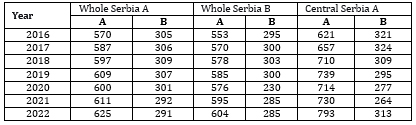
A: Number of new cancer cases per 100,000
inhabitants B: Number of deaths from cancer per 100,000 inhabitant
The results presented in Table 1 indicate a visibly higher rate
of new cases and deaths from cancer per 100,000 inhabitants in the
observed period in the Bor region compared to the region of Central
Serbia as well as Serbia as a whole. With the 2.5-fold increase in
the capacity of the copper smelter in Bor in mid-2023, as well as
the increased content of carcinogenic metals in PM10, an increase in
the number of new cases and deaths from cancer should be expected in
the coming period.
Considering that the data given in Table 1 refer to the Bor
District, which besides Bor also includes the cities of Negotin,
Kladovo, and Majdanpek, where exposure to polluted air is much
lower, and that the city of Bor has about 35,000 inhabitants, a
realistic estimate is that the number of new cases and deaths from
cancer in the city of Bor is much higher than the figures stated in
Table 1.
Due to increased mortality and migration trends, the population in
Serbia is generally decreasing, but this decrease in Bor is about
three times greater due to increased mortality in this city compared
to the rest of Serbia, Table2.
Table 2. Population decrease in Serbia in the
period 2016 – 2022 [28]

A: Number of inhabitants that decreased B:
Percentage (%) of decreased number of inhabitants
Health risk assessment from direct inhalation of
heavy metals in PM10 has been applied in many studies [29, 12, 30,
31, 17].
For the assessment of health risk to human health in the city of Bor
from direct inhalation of heavy metals in PM10 particles in ambient
air from the aspect of non-carcinogenic and carcinogenic effects,
the US EPA methodology [27] was used.
Non-carcinogenic effects
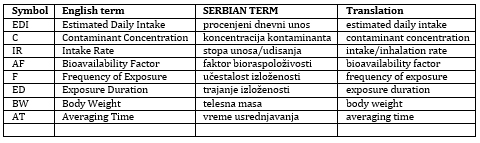
The Estimated Daily Intake (EDI) was performed according to the
methodology [29]:
EDI = (C x IR x AF x F x ED) / (BW x AT) (1)
AT = ED x 365
Meaning of individual symbols
Table 3. Symbols, names, and units of measure used in equations
(1)-(5)
The parameter for non-carcinogenic risk (HQ) represents the sum
of all hazards for different substances [27], i.e., the HQ hazard
quotient represents the ratio between the estimated exposure dose
and the reference dose RfD.
That is:
HQ = EDI / RfD ................................................ (2)
where RfD represents the reference dose (µg/kg body weight/day).
Values for reference doses RfD for different substances for
non-carcinogenic risk assessment were used from reference databases
[32,33]. If:
HQ < 1 risk acceptable.
HQ > 1 possible health problems.
The total non-carcinogenic risk HQ is determined by equation (3)
ACCORDING to inhalation of a larger number of substances at the same
time:
ΣHQ = HQ1 + HQ2 + ...... + HQn ....................................
(3)
where 1–n represents the number of analyzed pollutants in the air..
Carcinogenic effects
Carcinogenic risk (CR) represents the lifetime risk of cancer. It
is estimated that a person will develop cancer during their lifetime
due to exposure to carcinogenic components [27, 32,33, 34]:
CR = EDI x SF ................................................ (4)
where CR, EDI, and SF represent, respectively, carcinogenic risk
(dimensionless quantity), estimated daily intake (µg/kg body
weight/day), and inhalation slope factor (SF) [(µg/kg body
weight/day)⁻¹].
Values of slope factors (SF) used for carcinogenic risk assessment
for different substances were taken from relevant reference
databases [35, 32, 33]. Total CR is used as a summary indicator for
all carcinogenic substances, as the probability of cancer occurrence
due to exposure:
ΣCR = CR1 + CR2 + ...... + CRn ....................................
(5)
Acceptable risk limits are: CR: less than 10⁻⁶ - negligible risk;
10⁻⁶-10⁻⁴ - acceptable risk; >10⁻⁴ - high risk.
For the impact of Pb from ambient air on general health and
carcinogenic impact, a special procedure prescribed by IEUBK
developed by US EPA 2021 is used [36]. This model includes the total
intake of Pb into the body: from soil, water, house dust, food, and
inhalation (which makes up about 10% of the total amount of Pb
ingested), based on which the blood lead level (BLL) is calculated,
which is not the subject of this study, considering the availability
of only data on Pb content in ambient air [36,37].
The level of ambient air pollution in the urban part of Bor,
measured at eight measuring stations by the concentration of PM10
particles, as well as the content of heavy metals in them, according
to the US EPA standard [27]: Pb, Cd, Ni, and As. Table 4 shows the
results of mean annual contents of the mentioned pollutants, maximum
daily content, as well as the number of days during the calendar
year when the upper limit values were exceeded, which served as
starting values for health risk assessment in the Bor city
agglomeration.
Table 4. Measured values of PM10, Pb, Cd, Ni, and
As in ambient air in 2024 measured in the territory of the city of
Bor
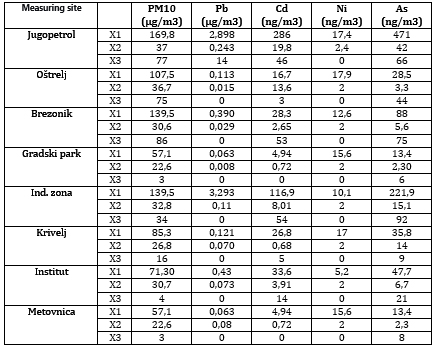
X1 – Maximum measured mean daily value at the measuring site
X2 – Annual mean value at the measuring site
X3 – Number of days in which the allowed limit value was exceeded at
the measuring site
Considering the fact that all eight measuring sites in the Bor city
agglomeration are distributed at different locations in accordance
with the existing wind rose, as well as the fact that people move
throughout the entire city area and are exposed to the effects of
polluted air in the entire area where air monitoring was carried
out. Therefore, the mean value of maximum concentrations measured at
individual measuring sites (X1), the mean value of average values at
all measuring sites (X2), and the mean value of the number of days
when limit values were exceeded (X3) were calculated, and the
obtained results are shown in Table 5.
Table 5. Annual mean values of pollutant
concentrations at all measuring sites in the territory of the city
of Bor in 2024.

X1- Arithmetic mean of measured maximum values in the territory
of the city of Bor
X2- Arithmetic mean of mean annual values at all measuring sites in
the territory of the city of Bor
X3- Arithmetic mean of the number of days when limit values of
pollutants were exceeded in the territory of the city of Bor
Table 6 shows a comparative analysis of data by scenarios: X-1, X-2,
and X-3 for mean values for all measuring sites in the Bor
agglomeration for 2024 and 2025. In 2025, according to Scenario X-1,
a decrease of 4.13 µg/m³ for PM10, a decrease of 0.431 µg/m³ for Pb,
a decrease of 30.71 ng/m³ for Cd, a decrease of 4.2 ng/m³ for Ni,
and an increase of 17.89 ng/m³ for As were determined. According to
Scenario X-2, an increase of 5.53 µg/m³ for PM10, an increase of
0.011 µg/m³ for Pb, a decrease of 2.4 ng/m³ for Cd, a decrease of
0.04 ng/m³ for Ni, and a decrease of 2.01 ng/m³ for As were
determined. According to Scenario X-3, the variation in the number
of days of exceeding limit values for each pollutant individually is
within the range of (+/-) three days. The values for the first five
months in 2026 are within the range of (+/-) 5% for all three
scenarios. These facts indicate that the operation of the
reconstructed copper smelter has stabilized, and that variations in
the content of pollutants in the ambient air in the urban part of
the city of Bor can affect the level of risk HQ and CR to human
health, compared to the results obtained for 2024, with variations
within limits below 5% in the coming period. The greatest danger
arises from constant exposure of people to the stated concentrations
of pollutants in ambient air over a longer period of time due to the
cumulative effect that leads to a growing level of CR.
Table 6. Dependence of pollutant concentrations in
ambient air of the city of Bor 2024/2025 according to scenario X-1
and X-2

For scenario X3, values vary within the range of (+/-) 3 days,
indicating that the values from 2024 have not changed.
The results presented in Table 5 were used for health risk
assessment for non-carcinogenic risks: Estimated Daily Intake (EDI)
and HQ for children and adults, as well as for CR assessment for
children and adults using equations (1) - (5). For calculating these
values, the following parameters were used for children (7 years of
age, 20 kg body weight, and inhalation rate of 10 m³/day) and for
adults (30 years of age, 70 kg body weight, and 20 m³/day). For
health risk assessment for metals in PM10 (Pb, Cd, Ni, and As),
available data from the California Environmental Protection Agency (CalEPA
2016) and US EPA 2016 databases for RfD and slope factor (SF) were
used, which enable the calculation of EDI, HQ, and CR for children
and adults.
Health Risk Assessment
Assessment of non-carcinogenic risks
Assessment of non-carcinogenic risk by calculating the Estimated
Daily Dose (EDD) was performed according to equation (1), and HQ
assessment was performed using equation (2) with recommended values
in databases [35,32] for children and adults.
a) Non-carcinogenic risk assessment for children
The calculated HQ1 values for children for individual toxic elements
in PM10 for maximum pollutant content values in 2024 (Scenario X-1)
are as follows: HQ1 - As = 0.18; HQ1 - Cd = 0.062; HQ1 - Ni =
0.00036. Total HQ1 = 0.24236 < 1,
The obtained results indicate that the non-carcinogenic risk for
children is negligible based on maximum pollutant values in ambient
air (Scenario X-1).
The values for mean annual concentrations of pollutants in ambient
air of the city of Bor for 2024 (Scenario X-2) are as follows:
HQ2-As = 0.018; HQ2-Cd = 0.0044; HQ2-Ni = 0.00005.
Total: HQ2 = 0.02245 < 1.
The obtained results indicate that the non-carcinogenic risk for
children is negligible based on mean annual values of pollutants in
ambient air in the city of Bor (Scenario X-2).
The values for HQ1 and HQ2 for children are < 1, indicating that
there is currently no acute non-carcinogenic risk. As shows the
highest potential danger, which in long-term exposure to these
concentrations of As and Cd pollutants can cumulatively be very
dangerous for the health of the young population in this
agglomeration.
b) Non-carcinogenic risk assessment for adults
For adults, HQ1 values based on maximum values for individual
pollutants in ambient air in the city of Bor during 2024 (Scenario
X-1) are:
HQ1-As = 0.11; HQ1-Cd = 0.036; HQ1-Ni = 0.00021. Total value: HQ1 =
0.14621 < 1.
Non-carcinogenic risk assessment for adults based on mean annual
values of pollutant content in ambient air of the city of Bor
(Scenario X-2) was performed in the same way by assessing HQ2 values
for each pollutant in ambient air:
HQ2-As = 0.010; HQ2-Cd = 0.0026; HQ2-Ni = 0.00003.
Total value: HQ2 = 0.01263 < 1.
The obtained results indicate that the total non-carcinogenic risk
HQ1 < 1 for adults based on maximum recorded values of pollutant
concentrations in ambient air during 2024 (Scenario X-1) is
negligible. Also, the total non-carcinogenic risk HQ2 < 1 for adults
based on mean values of pollutant concentrations in ambient air
during 2024 (Scenario X-2) is negligible.
In all cases, the non-carcinogenic risk for children and adults
according to Scenario X-1 and Scenario X-2 has a decreasing trend in
the series: HQAs > HQcd > HQNi. For Pb, the impact was not
calculated because its impact requires a special IEUBK procedure,
but considering its low content in ambient air, its impact could
increase total HQ values by at most 10%, which would not affect the
total HQ values.
Carcinogenic risk assessment
A) Carcinogenic risk assessment for the child population
CR calculation was performed using equation (4) and for the total
annual risk equation (5). The obtained CR values for individual
pollutants for maximum values in 2024 for the child population are
as follows (Scenario X-1):
CR1-As = 8.2E-5; CR1-Cd = 4.7E-4; CR1-Ni = 6.0E-6. Total CR1 =
5.58E-4.
For mean annual values for 2024, the following values were obtained
(Scenario 2):
CR2-As = 8.1E-5; CR2-Cd = 3.3E-5; CR2-Ni = 5.0E-6. Total CR2 =
1.24E-4.
According to Scenario X-1, total CR = 5.58E-4 is 5.6 times higher
than the EPA value and represents an unacceptable risk in which Cd
contributes 84.2%, As 14.7%, and Ni 1.1%. According to Scenario X-2,
total CR = 1.24E-4, which is about 24% above the EPA value and
represents a slightly unacceptable risk in which As = 66.9%, Cd =
26.9%, and Ni = 6.5% participate.
B) Carcinogenic risk assessment for adults
Carcinogenic risk (CR) assessment for adults based on maximum
pollutant values in PM10 during 2024 (Scenario X-1) shows the
following values: CR1-As = 4.8E-4; CR1-Cd = 2.7E-5; CR1-Ni = 3.0E-6.
Total CR1 = 5.07E-4.
The share of individual pollutants in total CR according to Scenario
X-1 is as follows: As ≈ 94.7%, Cd ≈ 5.3%, and Ni ≈ 0.6%.
Carcinogenic risk assessment for mean annual values of pollutant
concentrations in ambient air in the urban part of the city of Bor
(Scenario X-2) shows the following values:
CR2-As = 4.7E-5; CR2-Cd = 2.0E-5; CR2-Ni = 2.1E-6. Total CR2 =
6.91E-5.
The share of individual pollutants in total CR2 according to
Scenario X-2 is as follows: As ≈ 68%, Cd ≈ 28.9%, and Ni ≈ 3%.
The value of total CR1 = 5.07E-4 is multiple times higher than the
limit value defined by the EEA of 1.0E-4 and represents an
unacceptable risk to the health of adults. For Scenario 2, CR2 =
6.91E-5, which is within the limits between 1.0E-4 and 1.0E-6, so
the risk is considered to be within acceptable limits. However,
considering the fact that As has a predominant influence on CR and
that its concentration during 2024 was above the allowed limit for a
total of 40.19 days (Table 5), this indicates that the CR for
ambient air in the studied region can be considered unacceptable..
Multivariate analysis
Based on bivariate analysis of annual concentrations of pollutants
in ambient air in the urban zone in Bor, Pearson correlation
coefficients were calculated in Table 7. Statistical analysis of
data was performed using the SPSS statistical software package, with
assessment of statistical significance of relationships between
observed variables [38]. A positive correlation of 0.99 represents a
high level of agreement (p<0.01) between As concentration and Cd
concentration. Also, a good positive correlation exists between As
concentration and Ni of 0.93, as well as between Cd and Ni of 0.94.
There is also a negative correlation between Pb concentrations and
Cd: -0.96; Ni: -0.83; and As: -0.95, respectively. The obtained high
positive correlation coefficients between As, Cd, and Ni indicate
their relationship in the concentrates treated during 2024 in good
correlation, while the negative correlation of Pb with As, Cd, and
Ni indicates that the Pb content in the concentrate was variable.
Table 7. Pearson correlation coefficients between
pollutants in PM10 particles
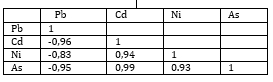
Table 8 shows Pearson correlation coefficients between HQ and CR
values for children and adults for both scenarios of pollutant
concentrations in ambient air (Scenario X-1 and Scenario X-2). The
obtained results show a high degree of positive correlation between
values for child and adult populations for HQ within the range of
0.93 – 0.98, indicating a high correlation between non-carcinogenic
health risk for child and adult populations according to both
scenarios X-1 and X-2, i.e., (HQ1,2)A / (HQ1,2)B = 0.93-0.98.
Positive correlation within the range of 0.96–0.99 between CR risk
in child and adult populations according to Scenario X-1 and X-2,
i.e., (CR1,2)A / (CR1,2)B = 0.96-0.99 indicates equal cancer risk
for both populations. The lowest degree of positive correlation was
found for the ratio of HQ and CR for Scenario X-1 and X-2, within
the range of 0.78 – 0.83 for the adult population, and for the child
population within the range of 0.83-0.88. Taking into account that
the HQ/CR correlation is positive for the child population relative
to the same ratios for the adult population (HQ1,2/CR1,2)A >
(HQ1,2/CR1,2)B, the probability that children will be exposed to CR
over time is higher. The correlation between (CR1,2)A / (CR1,2)B =
0.96–0.99 indicates that the probability of CR for both populations
is in a high positive correlation.
Table 8. Pearson correlation coefficients between
HQ and CR for children and adults according to scenario X-1 and X-2
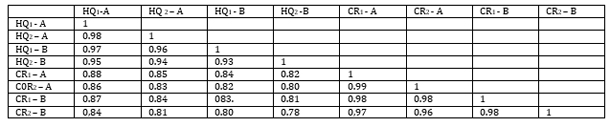
(1) – Scenario X-1; (2) Scenario X-2; A- Child
population; B- Adult population
CONCLUSION
The increase in the capacity of the copper smelter
in Bor (Serbia) in the second half of 2023 by 2.5 times and the
exploitation of the Čukaru Peki mine with increased As content in
the ore, which in the copper concentrate has a content more than ten
times above the allowed limit of 0.2% As, as well as the increase in
Cd content in many ways, reduces the quality of ambient air in the
urban area of the city of Bor. Also, the increased content of As and
Cd in PM10 particles in ambient air for years has led to increased
illness and mortality from cancer in Bor, which is much higher than
in the rest of Serbia. These facts justifiably lead to an increased
risk to the health of people in the city of Bor after the increase
in the capacity of the copper smelter, which is located in the
immediate vicinity of the urban area of the city of Bor.
The results of the non-carcinogenic risk assessment for children and
adults (HQ1,2)A < 1 (HQ1,2)B < 1 indicate that the non-carcinogenic
risks according to both scenarios (1 and 2) for children (A) and
adults (B) are currently at an acceptable level. However, long-term
continuous increased content of As and Cd in PM10 particles in
ambient air in the urban environment of the city of Bor, due to
their accumulation in the human body, will over time increase the
carcinogenic risk.
The carcinogenic risk assessment in the city of Bor according to the
scenario of maximum values recorded during 2024 (Scenario X-1) is
CR1 = 5.58E-4 for children (A) and CR1 = 5.07E-4 for adults (B),
which are multiple times above the limit values (1.0 - 4) defined by
EU standards, representing an unacceptable risk. According to the
scenario of mean annual values (Scenario X-2), CR2 = 1.24E-4 for
children (A) and CR2 = 6.9E-5 for adults (B), indicate a slightly
unacceptable risk for the child population (A) and an acceptable
risk for the adult population (B), which are within the limits
(10⁻⁴-10⁻⁶). The predominant influence on CR values is exerted by
the concentrations of As and Cd in PM10, whose concentrations in
ambient air are in high mutual positive correlation of 0.99. Since
these heavy metals accumulate in the human body, with long-term
exposure to their contents in ambient air, the probability of
increased CR increases. In conditions of increased capacity of the
copper smelter, the risk to human health in the city of Bor
increases, and due to the proximity of the border with Bulgaria and
Romania, an EU member state.
REFERENCES:
- Bodor K, Bodor Z, Szép R. Spatial distribution of trace
elements (As, Cd, Ni, Pb) from PM10 aerosols and human health
impact assessment in an Eastern European country: Romania.
Environ Monit Assess. 2021;193:176.
- Mihalj I, Šušak S, Malešević A, et al. Particulate air
pollution in central Serbia and some proposed measures for the
restoration of degraded and disturbed mining areas. Geogr
Pannonica. 2024;28(3):205-220.
- World Health Organization. Air quality guidelines for
Europe. Copenhagen: WHO Regional Office for Europe; 2019.
- European Environment Agency. Air quality in Europe 2019. EEA
Report No. 10/2019. Copenhagen: EEA; 2019. doi:10.2800/822355.
- Živković Ž, Panić M, Fedajev A, Veličković M. The challenges
of increasing the copper smelter capacity on ambient air quality
in Bor, Serbia. Water Air Soil Pollut. 2023;234:82.
- European Environment Agency. Air quality in Europe 2024. EEA
Report No. 5/2024. Luxembourg: Publications Office of the
European Union; 2024. doi:10.2800/22775.
- International Agency for Research on Cancer. IARC Monographs
on the Identification of Carcinogenic Hazards to Humans
[Internet]. Lyon: IARC; 2024 [cited 2024 Sep 30]. Available
from:
https://monographs.iarc.who.int/
- Sah D, Verma PK, Kandikonda MK, Lakhani A. Pollution
characteristics and human health through multiple exposure
pathways and source apportionment of heavy metals in PM10 at an
Indo-Gangetic site. Urban Clim. 2019;27:149-162.
doi:10.1016/j.uclim.2018.11.010.
- Du Y, Gao B, Zhou H, et al. Health risks assessment of heavy
metals in road dusts in urban parks of Beijing, China. Procedia
Environ Sci. 2013;18:299-309. doi:10.1016/j.proenv.2013.04.040.
- Keresztesi Á, Nita IA, Birsan MV, et al. Assessing the
variations in the chemical composition of rainwater and air
masses using the zonal and meridional circulation indices. Atmos
Res. 2020;237:104846. doi:10.1016/j.atmosres.2020.104846.
- Papanikolaou NC, Hatzidaki EG, Belivanis S, et al. Lead
toxicity update. A brief review. Med Sci Monit.
2005;11(10):RA329-RA336.
- Bromandi P, Rodriguez SA, Janatian N, et al. Health risk
assessment of European inhabitants exposed to contaminated
ambient particulate matter by potentially toxic elements.
Environ Pollut. 2023;323:121232.
- City of Bor Ecology Department. Annual report on air quality
in Bor 2024 and 2025. Bor: City Administration of Bor; 2025.
- Deng WJ, Zheng HL, Tsui AKY, Chen XW. Measurement and health
risk assessment of PM2.5 flame retardants, carbonyls and black
carbon in indoor and outdoor air in kindergartens in Hong Kong.
Environ Int. 2016;96:65-74.
- Juda-Rezler K, Reizer M, Oudinet JP. Determination and
analysis of PM10 source apportionment during episodes of air
pollution in Central Eastern European urban areas: the case of
wintertime 2006. Atmos Environ. 2011;45(36):6557-6566.
doi:10.1016/j.atmosenv.2011.08.020.
- Kovačević R, Radović B, Manojlović D, et al. Determining
PM10 pollution sources near the copper smelter in Bor, Serbia.
Atmosphere. 2024;15:1498. doi:10.3390/atmos15121498.
- Kozielska B, Kaleta D. Cancer risk associated with
inhalation exposure to PM10-bound PAHs and PM10-bound heavy
metals in Polish agglomerations. Appl Sci. 2025;15:7903.
doi:10.3390/app15147903.
- Đorđević P, Nikolić Đ, Jovanović I, et al. Episode of
extremely high concentrations of SO2 and particulate matter in
the urban environment of Bor, Serbia. Environ Res.
2013;126:204-207. doi:10.1016/j.envres.2013.05.002.
- Nikolić Đ, Milošević N, Mihajlović I, et al. Multi-criteria
analysis of air pollution with SO2 and PM10 in urban area around
the copper smelter in Bor, Serbia. Water Air Soil Pollut.
2010;206:369-383.
- Nikolić Đ, Milošević N, Živković Ž, et al. Multi-criteria
analysis of soil pollution by heavy metals in the vicinity of
the copper smelting plant in Bor (Serbia). J Serb Chem Soc.
2011;76(4):625-641. doi:10.2298/JSC100823054N.
- Taskinen P, Jokilaakso A. Reaction sequences in flash
smelting and converting furnaces: an in-depth view. Metall Mater
Trans B. 2021. doi:10.1007/s11663-021-02283-7.
- Nevsun Resources Ltd. Timok Upper Zone Copper-Gold Project:
prefeasibility study and resource estimate for the lower zone.
NI 43-101 Technical Report. Vancouver: Nevsun Resources Ltd.;
2018.
- Perez K, Toro N, Gávez E, et al. Environmental, economic and
technological factors affecting Chilean copper smelters: a
critical review. J Mater Res Technol. 2021;15:213-225.
doi:10.1016/j.jmrt.2021.08.007.
- US Environmental Protection Agency. Concepts, methods and
data sources for cumulative health risk assessment of multiple
chemicals, exposures and effects: a resource document. EPA/600/R-06/013F.
Washington (DC): US EPA; 2007.
- Institute of Public Health of Serbia "Dr Milan Jovanović
Batut". Cancer incidence and mortality in Central Serbia
2016-2022. Belgrade: Institute of Public Health of Serbia; 2022.
- Agency for Toxic Substances and Disease Registry. Public
Health Assessment Guidance Manual. Atlanta (GA): ATSDR; 2025.
- Gladović A, Petrović B, Vukelić D, et al. Carcinogenic and
human health risk assessment of children's and adults' exposure
to toxic metalloid(s) from PM10 in critical sites of the
Republic of Serbia. Environ Sci Pollut Res Int.
2023;30(25):61753-61765.
- Guo W, Zhang X, Yue J, et al. Nasal filters reveal exposure
risks of inhalable particulates and heavy metals in urban women.
Environ Int. 2024;188:108743.
- US Environmental Protection Agency. Integrated Risk
Information System (IRIS): Glossary [Internet]. Washington (DC):
US EPA; 2016.
- Taiwo AM, Awomeso JA, Taiwo OT, et al. Assessment of health
risks associated with road dust in major traffic hotspots in
Abeokuta metropolis, Ogun State, southwestern Nigeria. Stoch
Environ Res Risk Assess. 2017;31(2):431-447.
- Gangwar C, Choudhari B, Chauhan A, et al. Assessment of air
pollution caused by illegal e-waste burning to evaluate human
health risk. Environ Int. 2019;125:191-199.
- California Environmental Protection Agency. Office of
Environmental Health Hazard Assessment [Internet]. Sacramento
(CA): CalEPA; 2016. Available from:
https://oehha.ca.gov/
- US Environmental Protection Agency. IEUBK overview of
changes from IEUBKwin version 2. Washington (DC): US EPA; 2021.
- Kalbarczyk R, Kalbarczyk E. Structure of Pb concentration in
PM10 particulate matter in Poland and its dependence on thermal
air conditions and precipitation. Atmos Res. 2025;326:108306.
- Ho R. Handbook of univariate and multivariate data analysis
with IBM SPSS. 2nd ed. Boca Raton (FL): CRC Press; 2013.
- World Health Organization. WHO global air quality
guidelines: particulate matter (PM2.5 and PM10), ozone, nitrogen
dioxide, sulfur dioxide and carbon monoxide. Geneva: World
Health Organization; 2021.
|
|
|
|